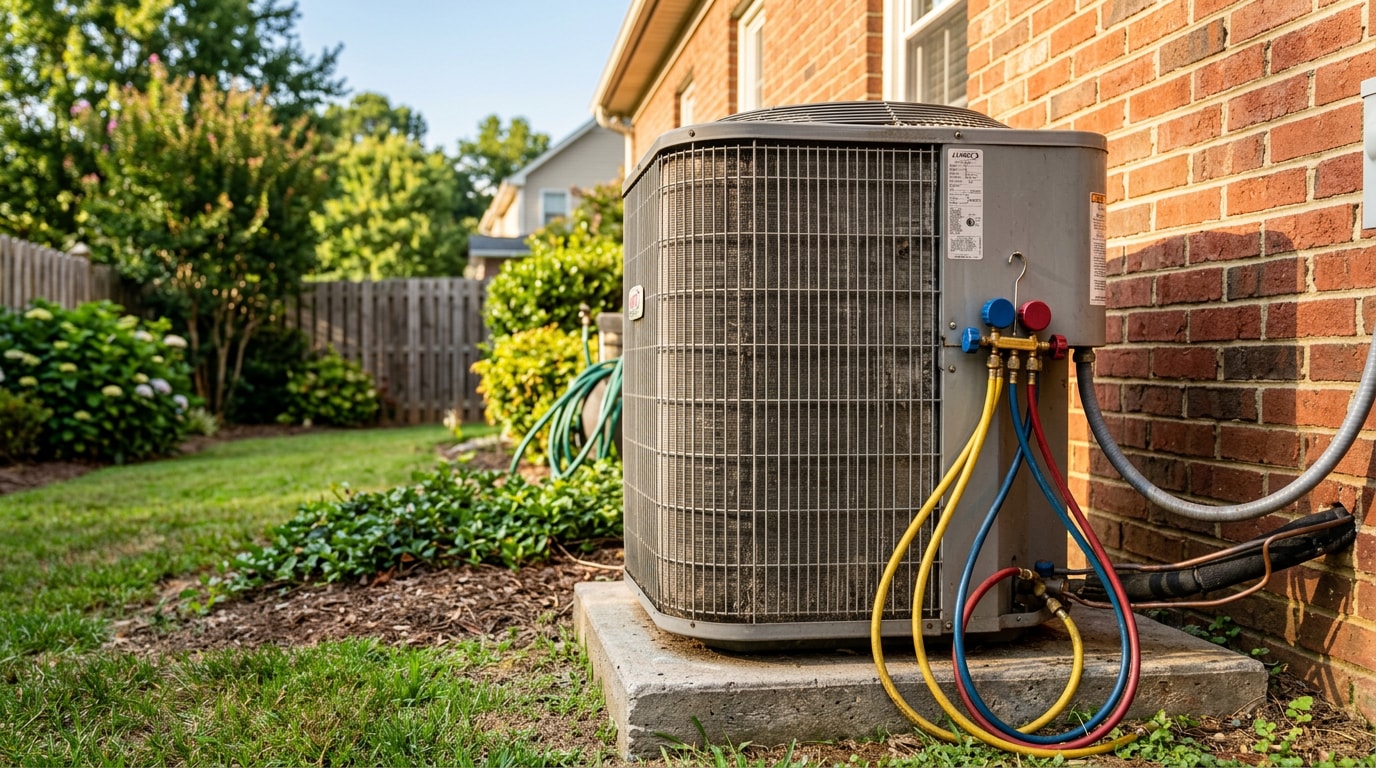
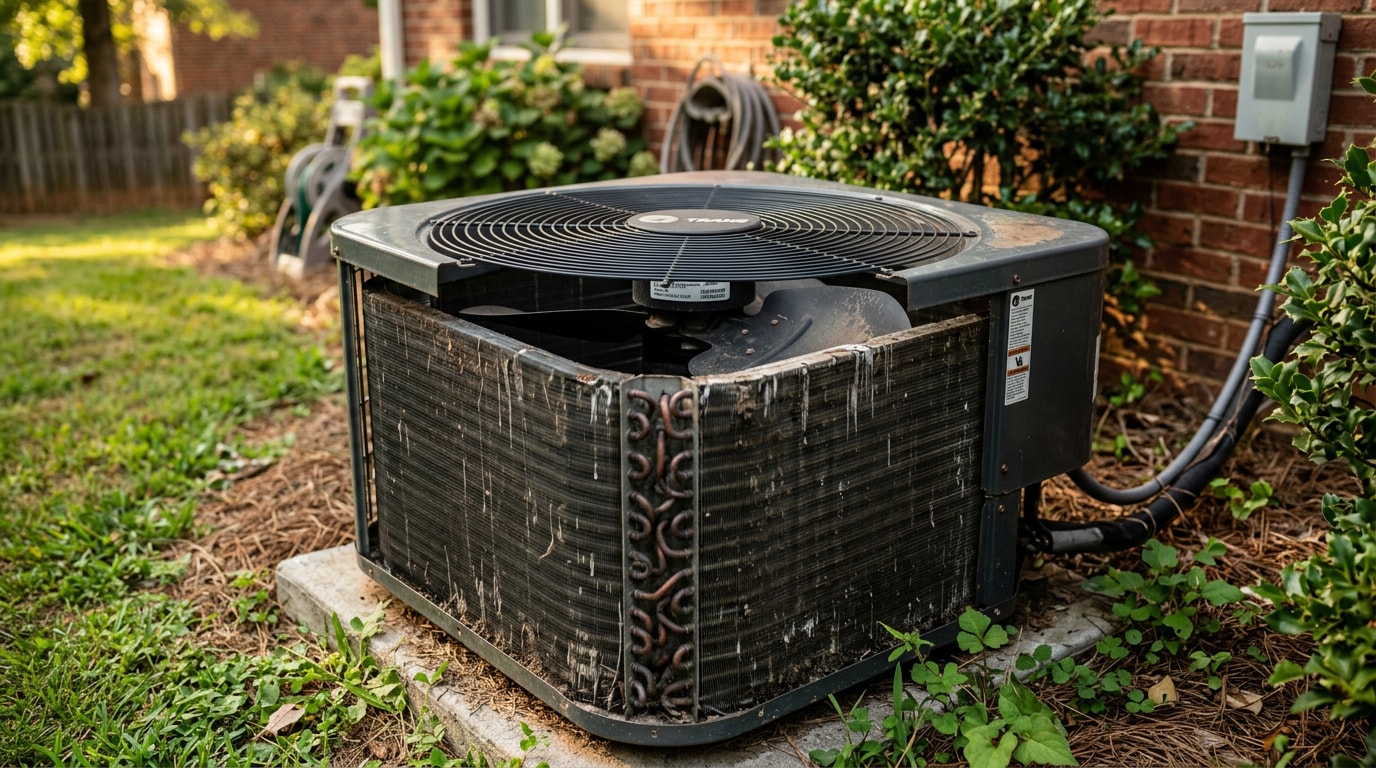
If your ac condenser is not turning on in Roswell, GA, you're probably standing near a vent that's still moving air while the unit in the backyard sits dead silent. That mismatch feels alarming, but it's actually a normal electrical setup, not proof of total system failure. Here's exactly what to check first, and when to stop troubleshooting and call a technician.
Why the Indoor Unit Runs While the Outdoor Condenser Stays Silent
Your indoor blower and your outdoor condenser run on separate circuits, breakers, and safety switches. One can keep humming along while the other goes completely dead.
Don't ignore it for long, though. A blower running without a working condenser just recirculates warm air through your ductwork, and that can eventually cause the evaporator coil to ice over, turning a simple electrical fix into a bigger repair bill.
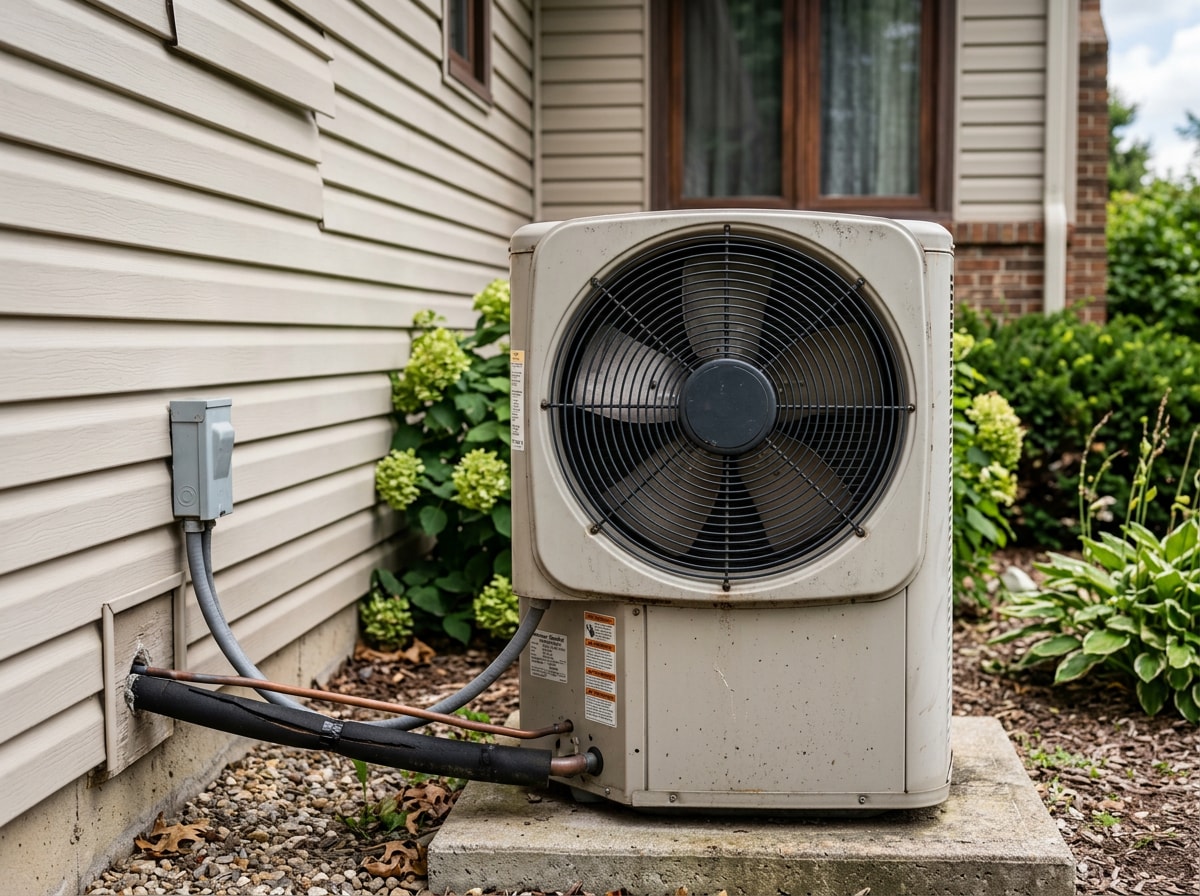
Quick Diagnostic Table: Match the Symptom to the Likely Cause
Before you grab a screwdriver, listen and look. What the unit is doing (or not doing) narrows the list of suspects fast.
| What You Notice | Likely Cause | Safe Next Step |
|---|---|---|
| Totally silent, no hum at all | Tripped breaker, open disconnect, or bad thermostat signal | Check breaker and disconnect switch first |
| Humming, but fan won't spin | Failed run capacitor or seized fan motor | Shut it off and schedule service, don't push-start the blade |
| Breaker trips every time you reset it | Short circuit, grounded compressor winding, or failing contactor | Stop resetting it; call a professional |
| Fan spins slowly or inconsistently | Weak capacitor or worn motor bearings | Note the pattern and report it to your technician |
| Clicking or buzzing from the panel | Pitted or stuck contactor | Turn the thermostat off and call for diagnostics |
Common Reasons an AC Condenser Won't Turn On
Most cases trace back to one of five issues. They range from a simple reset to a part that genuinely needs replacing, so it helps to work through them in order, starting with the easiest to check.
Power Supply & Circuit Breaker Issues
Start with the two power checks professionals always rule out first: the dedicated breaker in your electrical panel and the outdoor disconnect switch mounted near the condenser. A single tripped breaker is usually harmless.
A breaker that trips again right after resetting points to a real electrical fault. The breaker lives in your panel and protects your home's wiring, while the disconnect is a separate pull-out or switch box next to the condenser, meant for safely cutting power during service.
To check them: flip the breaker fully off, wait 30 seconds, then switch it back on. If it holds, confirm the disconnect nearby is firmly in the "on" position. According to a CPSC home electrical safety advisory, if an appliance repeatedly blows a fuse, trips a circuit breaker, or has given you a shock, you should unplug it and have it repaired or replaced rather than keep resetting it.
Contactor & Capacitor Failures
The contactor is a small relay that uses a low-voltage signal from your thermostat to close a high-voltage circuit, sending power to the compressor and fan. When it fails, you'll often hear buzzing or rapid clicking as it struggles to engage.
Georgia's heat and humidity make this worse. Capacitors, contactors, and control boards all sit outside, cycling on and off through brutal summer afternoons, and that thermal stress accelerates wear. A hum with no spin is the classic calling card of a failed run capacitor.
Capacitors store an electrical charge even after the system is powered down. Under OSHA's electrical work practice standard 1910.333, stored electric energy that might endanger personnel must be released, and capacitors must be discharged and high-capacitance elements short-circuited and grounded before anyone works on them. That's one reason capacitor and contactor work should go to a licensed technician, not a weekend DIY project.
Condenser Fan Motor Problems
A failing fan motor usually gives warning signs before it quits completely: grinding, squealing, or a fan that spins noticeably slower than normal. Debris jammed against the blade or worn-out bearings are common culprits.
When the fan can't move air across the coil, heat builds up fast. The high-pressure switch is designed to shut the whole unit down in that scenario, protecting the compressor from damage. That's a safety feature working correctly, not a separate problem to chase.
Compressor Malfunction
Compressor problems sit at the serious end of the spectrum. A failing compressor can cause the unit to hum without starting, trip breakers repeatedly, or simply refuse to run at all, and diagnosing it correctly requires specialized tools most homeowners don't have.
Because compressor failure is expensive to replace and risky to misdiagnose, this is where DIY troubleshooting should stop. If a technician confirms the compressor is gone, it's also worth asking about air conditioning replacement costs before paying for a repair on an older system.
Thermostat Settings & Airflow Blockage
Before assuming the worst, rule out the simplest explanations. A mode accidentally set to "Fan" instead of "Cool," or dead batteries in a wireless thermostat, can look identical to a hardware failure from the outside.
Physical blockage matters too. Leaves, grass clippings, and general debris around the condenser coils can restrict airflow enough to trigger a safety shutdown, especially after storms or heavy pollen season.
DIY Troubleshooting Steps You Can Safely Try
Work through this short checklist before calling for service:
- Reset the breaker. Flip it fully off, wait 30 seconds, then back on. If it trips again immediately, stop and call a professional.
- Confirm the disconnect switch is on. It's a separate box mounted on or near the outdoor unit.
- Check the thermostat. Confirm it's set to "Cool," the target temperature is below room temperature, and batteries aren't dead.
- Walk around the condenser. Look for leaves, grass clippings, or debris blocking the coil, and clear anything you can reach by hand.
- Look, don't touch, inside the panel. Scorched wiring, a cracked housing, or a burning smell means stop and schedule a professional assessment through our air conditioning repair services.
When to Stop Troubleshooting and Call a Professional
Some symptoms aren't DIY territory. Call a technician right away if you notice:
- A breaker that trips again immediately after resetting
- Buzzing, clicking, or humming with no fan movement
- A burning smell or scorched wiring near the disconnect or panel
- Repeated short cycling (on for a few seconds, then off)
- An outdoor unit that's hot to the touch with the fan not moving
In our service calls across Roswell and the north Atlanta metro, a failed capacitor or a tripped breaker is the most common reason we find a silent condenser, not a dead compressor. Schedule a free inspection and we'll confirm which one you're dealing with before anything gets replaced.
Preventing Future Outdoor Unit Failures With Seasonal Maintenance
Capacitors, contactors, and motors rarely fail all at once. They degrade gradually under heat stress until a 95-degree afternoon finally pushes them past the limit. Seasonal maintenance catches that wear early, before it turns into a breakdown on the hottest day of the year.
During a professional tune-up, a technician typically measures capacitor microfarad output, checks contactor resistance for pitting, and tests motor winding continuity. None of this requires guesswork; it's measurable, repeatable data.
Keeping your cooling and heating system at peak performance by having a qualified contractor conduct tune-ups in the spring and in the fall allows you to catch small issues before they become expensive problems , according to ENERGY STAR's homeowner maintenance guidance. Our HVAC maintenance plans are built around that same logic: catch it early, avoid the mid-July breakdown.
What a Professional Condenser Repair Visit Looks Like
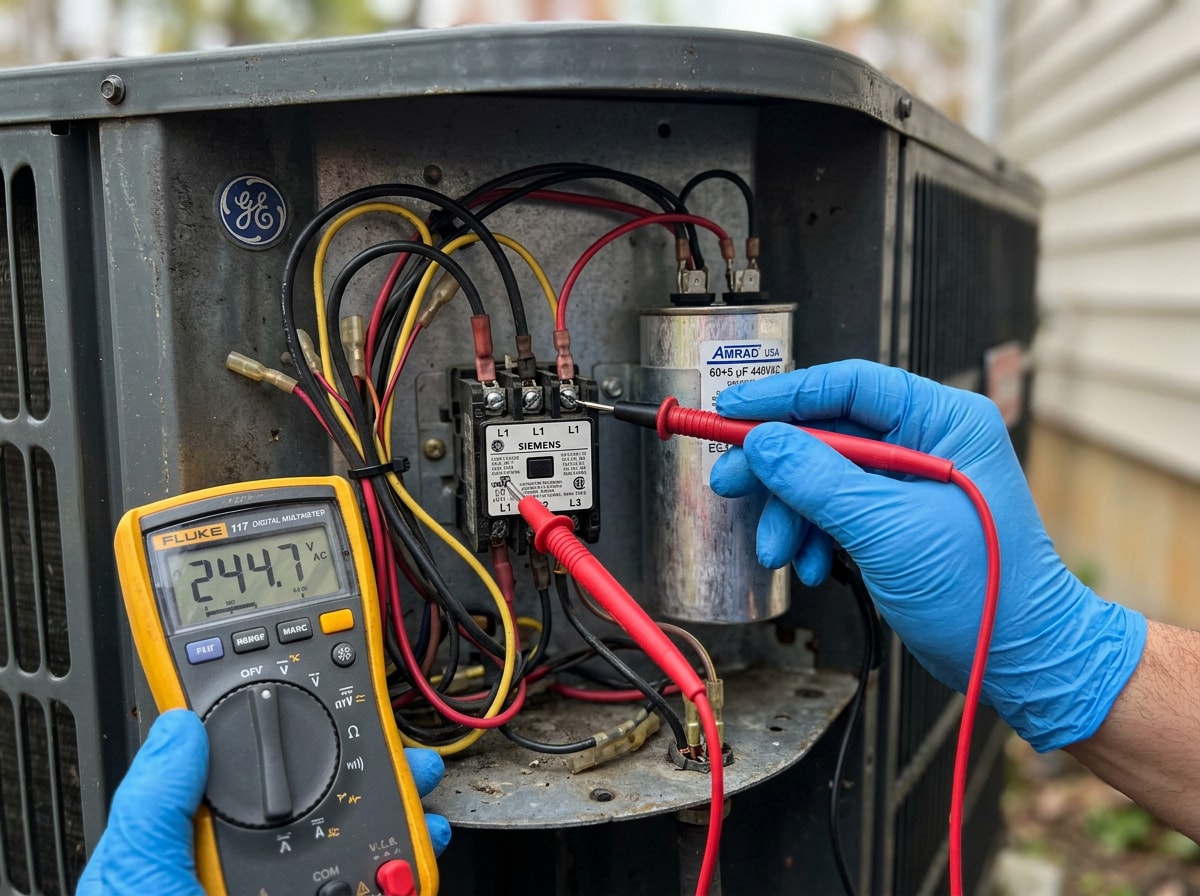
When you call about a silent condenser, a technician should follow a predictable sequence rather than guessing. First, they verify power at the disconnect and panel. Next, they test the capacitor with a multimeter, check the contactor for pitting, and inspect the fan motor windings.
Most capacitor, contactor, and thermostat issues are diagnosed and fixed in a single visit because the parts are small, common, and kept on the truck. Compressor failures take longer to confirm because the technician has to rule out refrigerant pressure problems, electrical faults, and mechanical seizure before recommending replacement. If you're weighing repair against replacement on an older system, our Roswell, GA service area page has details on what we cover locally, and homeowners dealing with a full system replacement elsewhere in the region may find our guide to central heating and cooling in Woodstock, GA useful for understanding how indoor and outdoor components work together.
For a closer look at our full range of comfort services, visit our homepage.
FAQ
Why is my AC inside unit running, but the outside unit is not turning on?
Your indoor and outdoor units have separate power sources and controls, so one can keep running while the other shuts down. The most common reasons are a tripped breaker, a failed capacitor, or a stuck contactor.
Why is my AC condenser humming but not starting?
A hum without a start-up is a classic capacitor failure sound. The motor is getting partial power but can't generate enough torque to actually spin, often because a weak capacitor can't deliver the jolt needed to start it moving.
Why does my condenser fan spin slowly instead of not spinning at all?
A fan that spins slower than normal, rather than not at all, usually points to a weakening capacitor or motor bearings that are starting to wear out. It's often an early warning sign rather than a full failure, so it's worth having it checked before it stops completely.
How much does it cost to fix an AC condenser that won't turn on?
Cost depends entirely on the cause. A capacitor or contactor swap is typically a minor repair, while compressor replacement sits at the higher end of the price range. Ask for an itemized diagnostic quote before approving any repair work.
Can I fix an AC condenser myself, or do I need a professional?
Some steps are homeowner-safe: resetting a breaker, clearing debris, and checking thermostat settings. Capacitor, contactor, and compressor work involves high-voltage risk and stored electrical charge, so that work belongs with a licensed HVAC technician. Schedule a free inspection once you hit that point.
What's the difference between the breaker and the disconnect switch?
The breaker sits in your home's main electrical panel and protects the house wiring feeding the condenser. The disconnect is a separate switch or pull-out box mounted on or near the outdoor unit itself, meant for safely cutting power during service calls.
About the Author
This guide was reviewed by a NATE-certified technician on the AK Service HVAC team, which services AC condenser repairs throughout Roswell, Alpharetta, Sandy Springs, and the surrounding north Atlanta metro. Questions about a specific unit? Contact us or browse recent completed projects in your area.