If you're asking how do baseboard heaters work in East Cobb County, GA homes, the short answer is convection: cold air gets pulled in low, warmed against a metal element, and pushed back into the room with no fan involved. These long, low units are common in East Cobb sunrooms, additions, and finished basements that were never tied into the main ductwork. Understanding the mechanics helps you troubleshoot a cold room, decide between electric and hydronic units, and keep the system safe through a Georgia winter.
What Are Baseboard Heaters?
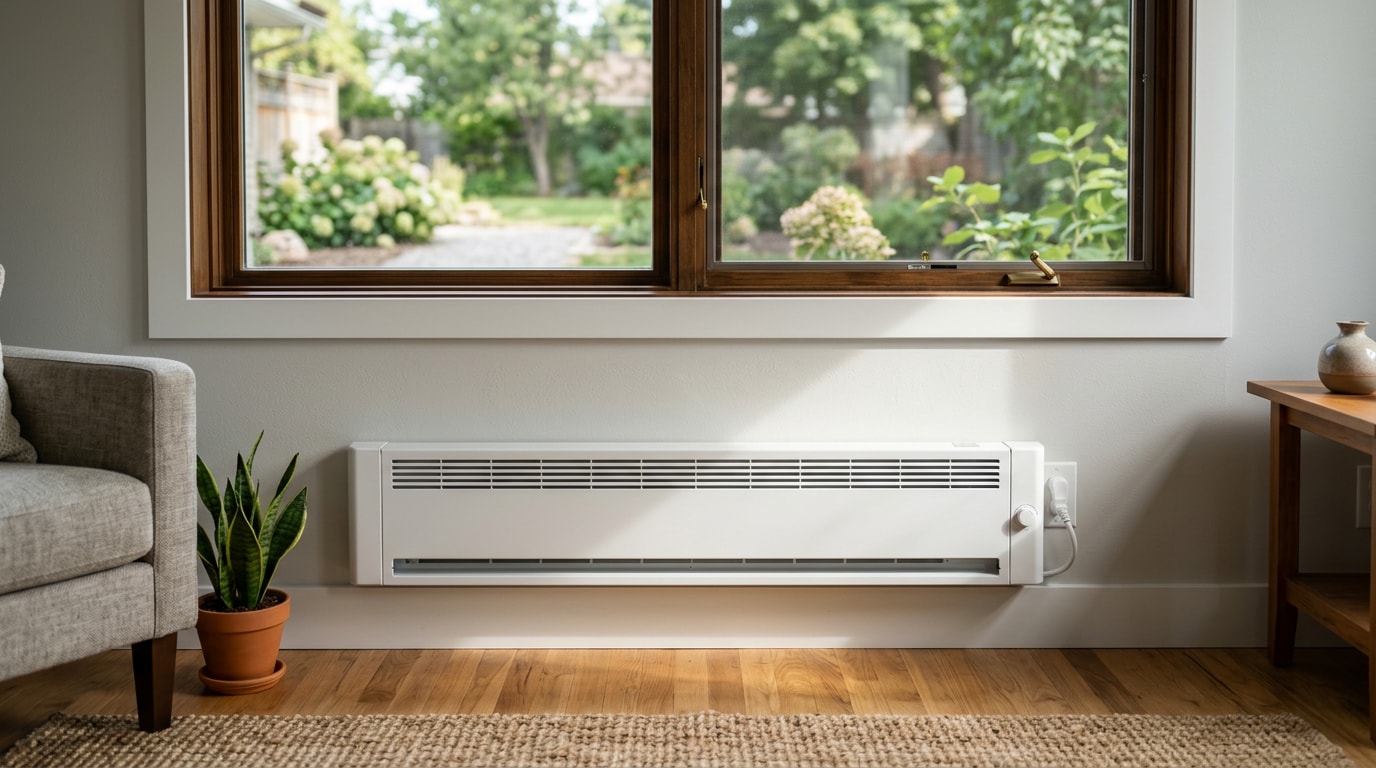
Baseboard heaters are zone heating devices mounted along the base of a wall, almost always under a window, built to warm one room at a time instead of a whole house through central ductwork. Baseboard heaters are long, narrow heaters that run along the bottom of walls, and there are two common types: electric and hydronic.
Both styles rely on the same basic physics:
- Electric baseboard heaters use a resistance element, similar to a toaster coil, to generate heat directly.
- Hydronic baseboard heaters circulate hot water or oil from a boiler through a finned copper pipe.
This zone-based setup is exactly why so many East Cobb homes still rely on them. Older subdivisions here often have additions, converted garages, or finished basements that never got connected to the primary HVAC system. A baseboard unit solves that gap without ripping into walls or running new ductwork. For a broader look at how heating equipment fits together in an East Cobb home, see our HVAC contractor services.
The Convection Loop: How Baseboard Heaters Move Heat
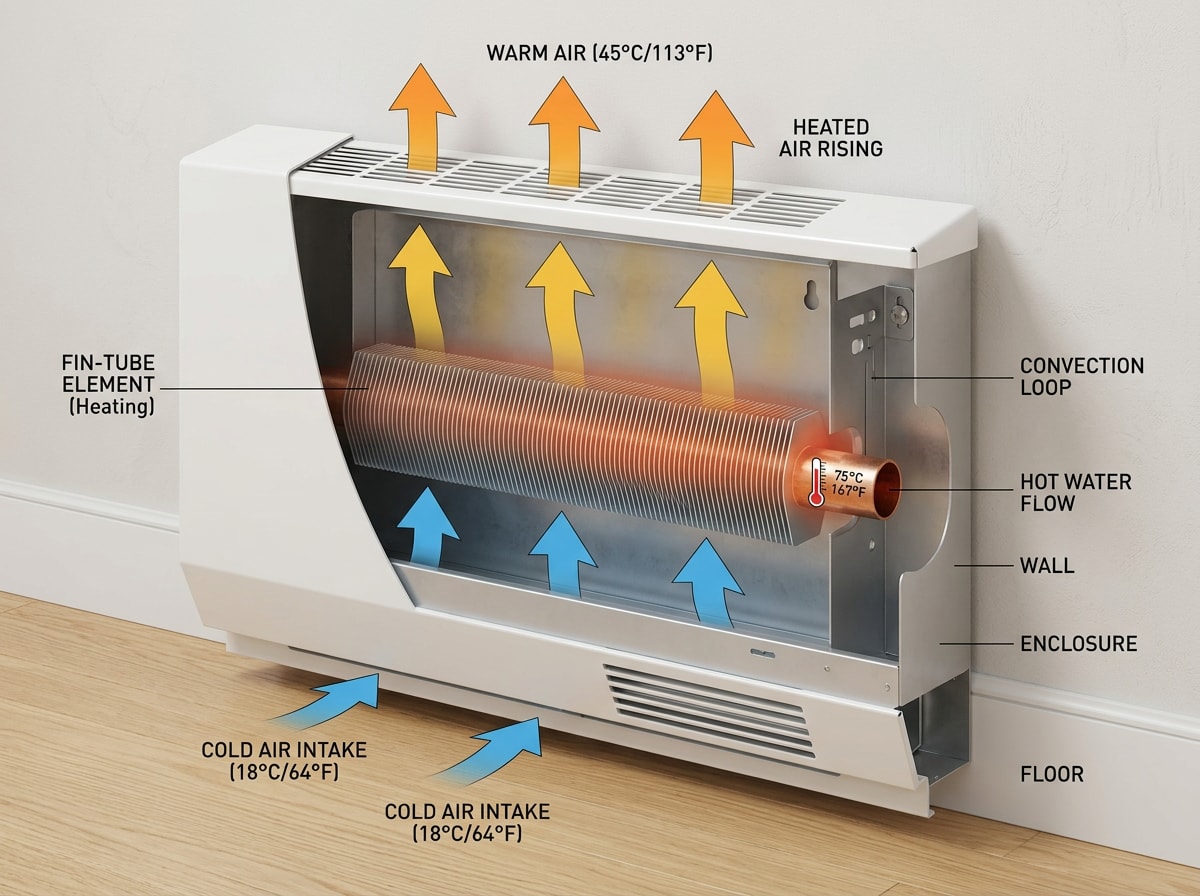
Baseboard heaters sit low on the wall for a reason. Baseboard heaters sit low on the wall because that's where the coldest air in any room settles, since cool air is denser than warm air and pools at floor level, especially in winter.
The heater catches that cold air through a gap at the base of the cover, passes it over a hot fin-tube element, and releases the warmed air through slots at the top, and as warm air rises, more cold air rushes in from below. That self-sustaining cycle is convection, and it's the mechanical heart of every baseboard heater regardless of fuel type.
No fan. No blower. Just physics. That also means clear inlet and outlet openings matter enormously.
Push furniture against the cover and the inlet stalls; let curtains drape over the top and the warm air backs up, and both cut heat output without anything inside the heater failing.
Electric vs. Hydronic Baseboard Heaters: How Each Type Works
Both types of baseboard heating use the same convection principle, and the difference is what's inside the cover.
| Feature | Electric Baseboard | Hydronic Baseboard |
|---|---|---|
| Heat source | Resistance wire element | Hot water or oil from a boiler |
| Warm-up speed | Fast | Slower, but holds heat longer |
| Typical install cost | Lower upfront | Higher upfront |
| Running cost | Generally higher | Generally lower over time |
| Best for | Single-room or occasional-use spaces | Rooms used daily, whole additions |
How Do Electric Baseboard Heaters Work?
Within an electric baseboard heater, an electric current flows through the heating element, and the electrical resistance of the element causes it to heat up as the electricity tries to flow through it. As that air warms, it rises and pulls in cooler air to continue the cycle.
Electric units are often marketed as "100% efficient" at the appliance level, since nearly every watt becomes heat. But the U.S. Department of Energy still classifies electric resistance heating as one of the costlier ways to heat a home once you factor in electricity rates, a nuance worth weighing before choosing it as a primary heat source. You can read the Department of Energy's electric resistance heating overview for more on how it compares to other systems.
How Do Hydronic Baseboard Heaters Work?
The cold air is heated by metal fins, oil, or fluid — if heated metal fins are involved the unit is an electric baseboard heater, and if heated oil or fluid is involved, it's a hydronic baseboard heater. A boiler heats the fluid, which flows through a copper pipe lined with fins inside the unit.
Because the water retains heat, hydronic units often stay warm for several minutes after the thermostat shuts off, unlike electric fins which cool almost immediately. That residual warmth is one reason hydronic systems are frequently described as more efficient over a full heating cycle, even though they cost more to install.
What the Fin-Tube Does (and Why Damaged Fins Cost You Heat)
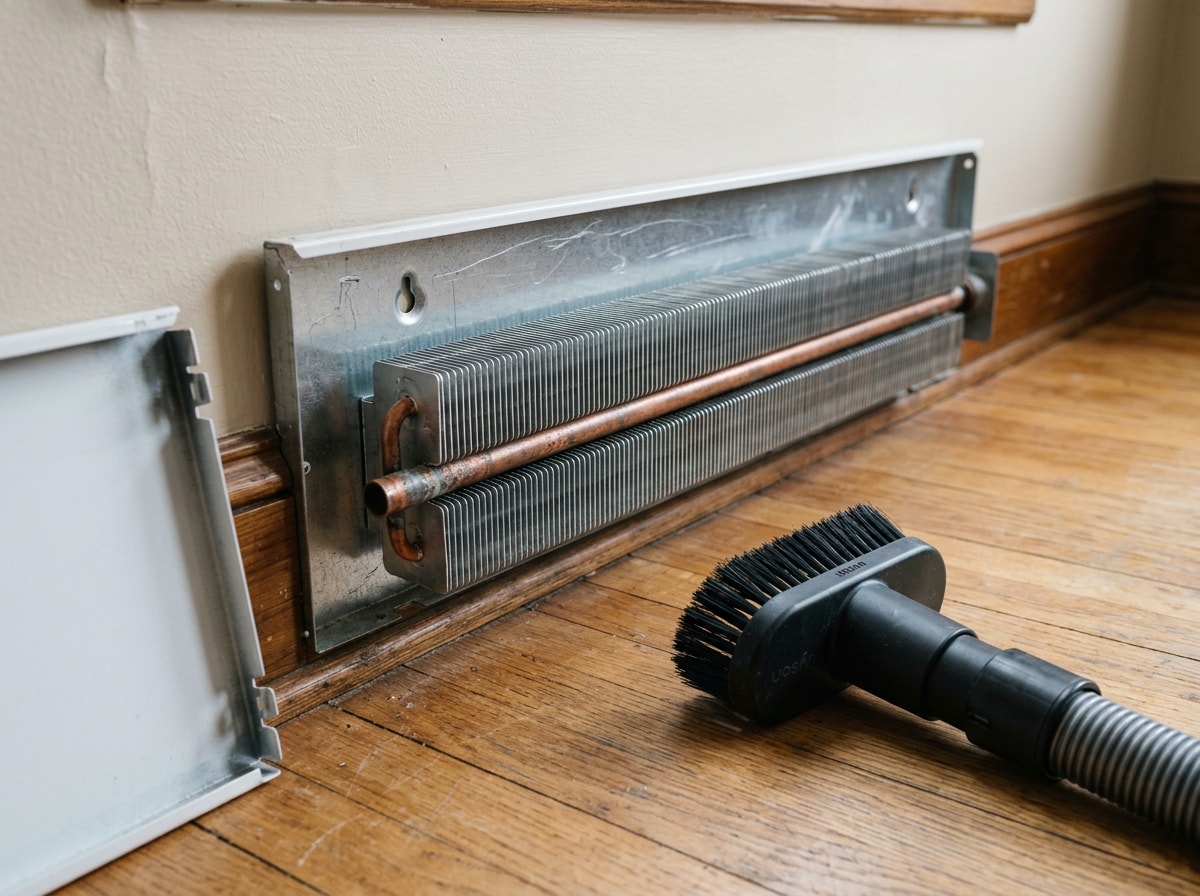
The fin-tube is the real working core of a baseboard heater. The thin fins allow for the best radiation of heat as air fills in the spaces between. More exposed metal surface means more contact with passing air, which means faster, more efficient heating.
Electric fin-tube elements typically run hotter than hydronic fins, since the resistance wire reaches full temperature almost instantly while hot water fins only ever get as warm as the boiler water feeding them. Either way, bent, crushed, or dust-caked fins reduce the surface area touching the air, which directly cuts heat output even when the unit sounds like it's running fine.
Dust buildup is more damaging than most homeowners assume. Cobwebs and dust that collect on the tiny metal fins can restrict heating by more than 80%.
Why Are Baseboard Heaters Placed Under Windows?
Heaters are often located on the wall under a window, where the air is coldest and loses the most heat next to the glass. Placing the unit there intercepts the draft right where it forms, instead of letting cold air spread across the floor.
This logic still holds in plenty of East Cobb homes with original single-pane or early double-pane windows, where drafts off the glass are often more noticeable than in newer construction. Keeping the floor area in front of the heater clear makes a real difference in comfort.
Advantages of Baseboard Heating
Many of baseboard heating's biggest benefits come straight from how it works: no ductwork, room-by-room control, and a convection-only design with no moving fan parts.
Targeted Heating
Baseboard heaters let you warm one area without touching the temperature elsewhere in the house. This is especially useful for a stubborn cold spot, a sunroom addition, or a finished basement the main ductwork never reached.
Allergy-Friendly Operation
These heaters run along the base of your walls and use natural convection to slowly and evenly warm the room, with no fans and no blowing dust — just quiet, steady heat. For households managing allergies or asthma, that can mean noticeably better air quality during heating season.
Low Maintenance and Reliability
With few or no moving parts, baseboard heaters can last 20 years or longer with proper care. In our service calls across East Cobb's older subdivisions, it's common to find original hydronic units from the 1980s still running after three decades, simply because someone kept the fins clean. For a broader tune-up schedule across a home's full heating system, see our HVAC maintenance services.
Limitations to Know Before You Rely on Baseboard Heat
Baseboard heaters have real limits worth weighing honestly.
- Limited output. They work best as supplemental heat, not a home's sole heat source, especially in poorly insulated additions.
- Inconsistent cycling. Units with built-in thermostats sometimes cycle on and off more than homeowners expect; wiring the heater to a wall-mounted thermostat instead often stabilizes comfort.
- Slower recovery. Because there's no fan, a cold room with a baseboard heater takes longer to warm up than one on forced air.
If a room is consistently too cold even with a working baseboard unit, it may be a sign the space needs to be tied into central heating instead. Our team can walk through options during a furnace repair visit or a full system evaluation.
Safety Guidelines for Baseboard Heaters in East Cobb Homes
Baseboard heaters are fixed, hardwired appliances, which makes them safer than portable space heaters in some respects, but they still run hot enough to ignite nearby fabric.
Flammable objects like curtains, rugs, and furniture should never be too close to the heater — a general rule of thumb is maintaining at least a 12-inch clearance around the unit unless the manufacturer specifies otherwise, since this prevents heat from accumulating on materials that could potentially catch fire. Always check the nameplate or installation manual for your specific model's exact clearance requirements.
It's worth noting this is different from portable plug-in space heaters, which carry a stricter standard. The Consumer Product Safety Commission recommends keeping portable heaters at least three feet from beds, clothes, curtains, and furniture, since those units run hotter at the surface and don't have the same fixed, code-rated clearances as a wired-in baseboard unit.
Other quick safety habits:
- Never store boxes, toys, or bedding on top of a baseboard cover.
- Keep electrical cords and power strips away from the unit.
- Replace a bent or missing cover panel promptly, it's there to prevent accidental contact with the element.
Maintenance & Efficiency Tips to Keep Your Baseboard Heater Running Right
Routine cleaning takes about twenty minutes a year and pays off in both safety and performance.
- Shut off power to the unit at the breaker.
- Remove the front cover panel.
- Vacuum the fins gently with a soft brush attachment.
- Use a fin comb to straighten any bent blades.
- Wipe down the cover before reinstalling it.
The DOE recommends setting your thermostat to 68 degrees F when you're awake and lowering it when you're away or sleeping , a habit that pairs well with zone heating since each baseboard unit can be adjusted independently by room.
Baseboard Heat in East Cobb County's Climate
East Cobb doesn't get brutal winters, but it gets enough cold snaps to matter. In North Georgia outside the mountains, winter high temperatures average in the 50s, lows average in the mid to lower 30s, and lows of 32 degrees or lower can be expected on 50 to 70 days a year.
In East Cobb specifically, the average January high is around 53°F with lows dipping to about 34°F, while December runs from roughly 54°F in the day down to 36°F at night. That's exactly the kind of weather where a baseboard unit in a sunroom or finished basement earns its keep without needing to run constantly.
If you're weighing whether to keep a baseboard unit, upgrade it, or tie that space into your central system, our team has handled both approaches across East Cobb County homes of every era. We also cover nearby areas including Roswell, Sandy Springs, and Woodstock. For a deeper look at whole-home heating options, check out our Central Heating and Cooling in Woodstock, GA guide.
Not sure which direction makes sense for your home? Schedule a free inspection and we'll walk the space with you.
FAQ
How does baseboard heating work?
Baseboard heaters use convection: cold air enters low, passes over a heated element or fin-tube, and rises back into the room as warm air, creating a continuous loop with no fan required.
Are electric or hydronic baseboard heaters better?
It depends on priorities. Hydronic units generally cost more upfront but retain heat longer and run cheaper over time, while electric units cost less to install and respond faster to a thermostat change.
Is baseboard heating expensive to run?
Electric baseboard heat typically costs more to run than hydronic or central systems, since electric resistance heating converts power to heat at a 1-to-1 ratio with no efficiency boost, unlike a heat pump.
Do baseboard heaters need maintenance?
Yes, though minimal. An annual fin cleaning before heating season keeps airflow clear; skipping it can cut heat output by a significant margin over just a few years.
Why are baseboard heaters placed under windows?
Windows are where cold drafts form first. Placing the heater there lets it catch and warm that cold air before it spreads across the floor.
How long do baseboard heaters last?
With clean fins and an undamaged element, both electric and hydronic baseboard units commonly run 20 years or more, since they have few moving parts to wear out.
Can I cover a baseboard heater with furniture or curtains?
No. Blocking the inlet or outlet stalls the convection loop, wastes energy, and can create a fire hazard if flammable material sits too close to the hot fins.
If you'd like a professional look at a baseboard system, a cold room, or a full heating upgrade, our team at AK Service HVAC serves homeowners throughout East Cobb County and the surrounding metro Atlanta area. Schedule a free inspection and we'll help you figure out the right fix.