A boiler looks like a boxy metal unit with a control panel on the front and water pipes running in and out of the top or side. If you're staring at your mechanical closet in Cumming, GA trying to figure out what you're looking at, this guide walks through exactly what to check first.
What Does a Boiler Look Like?
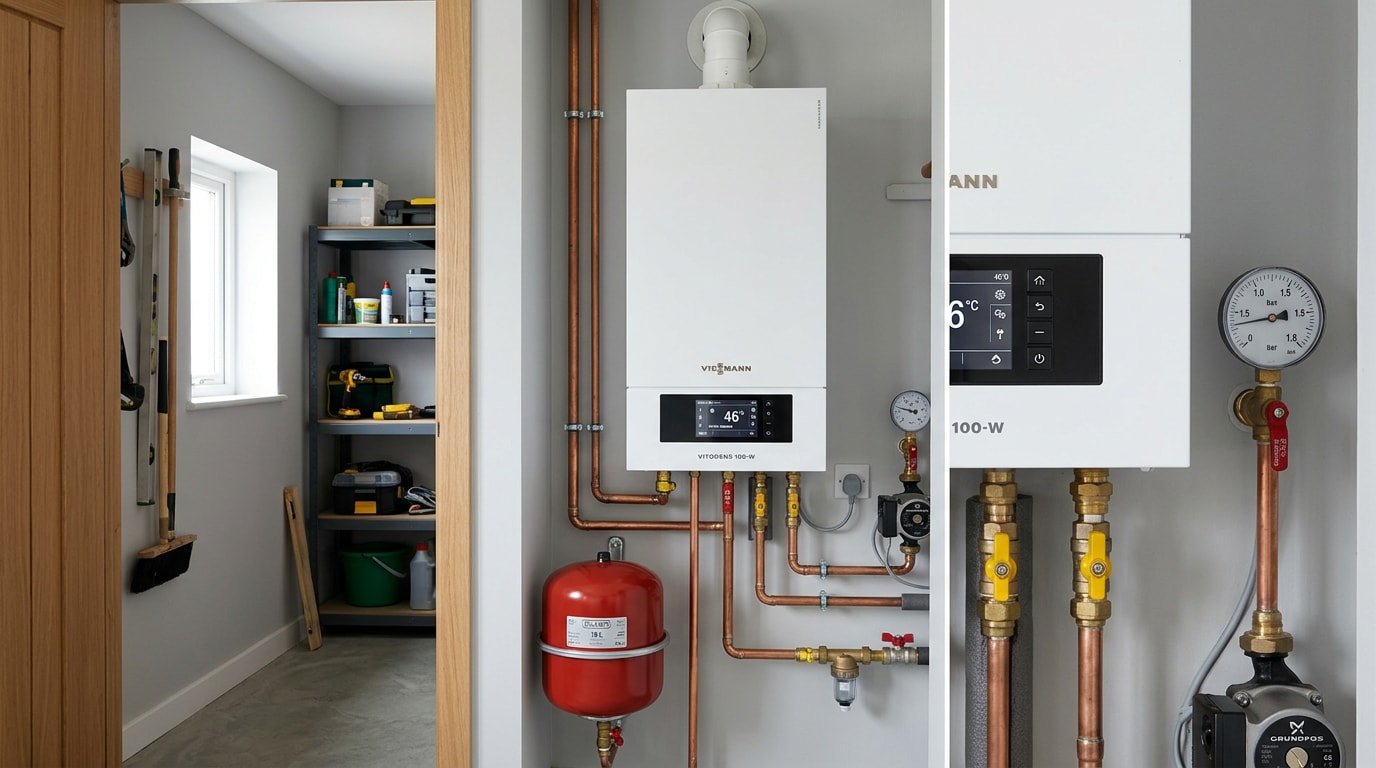
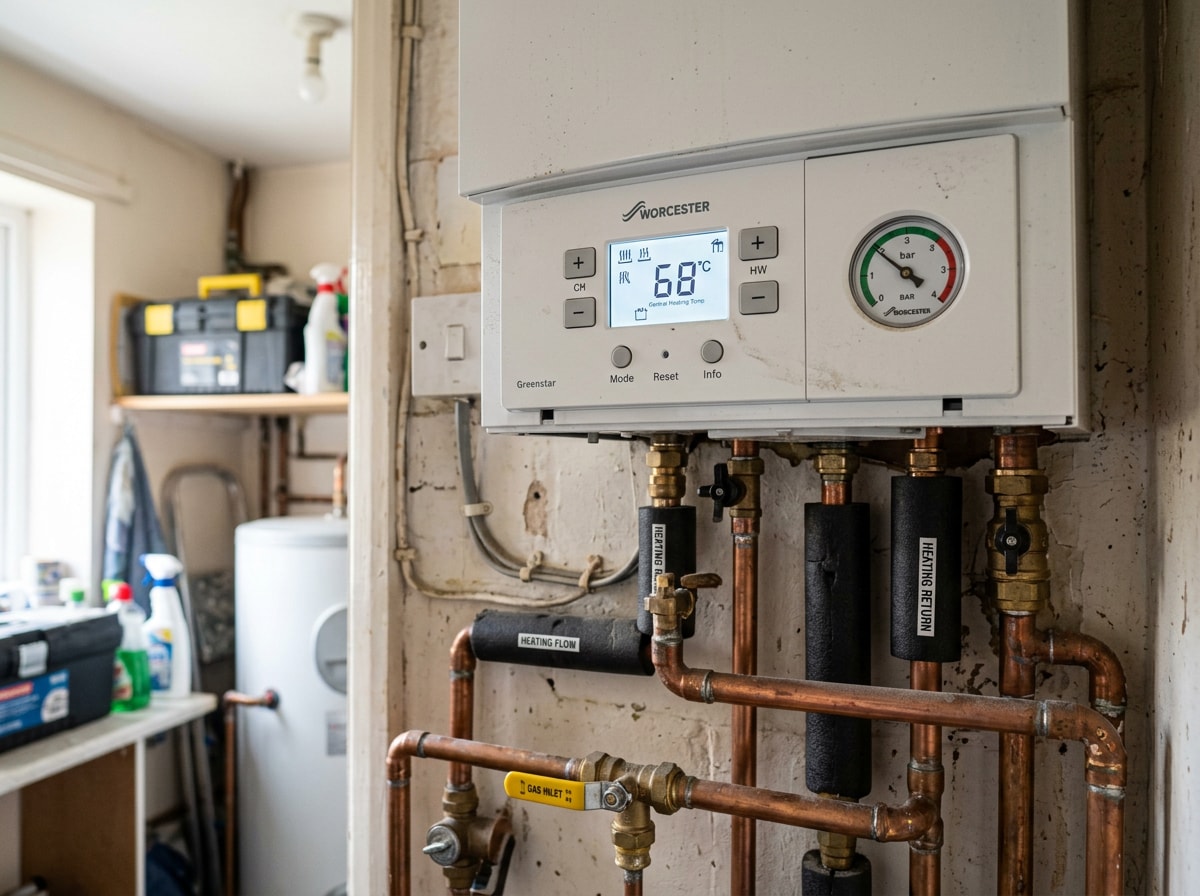
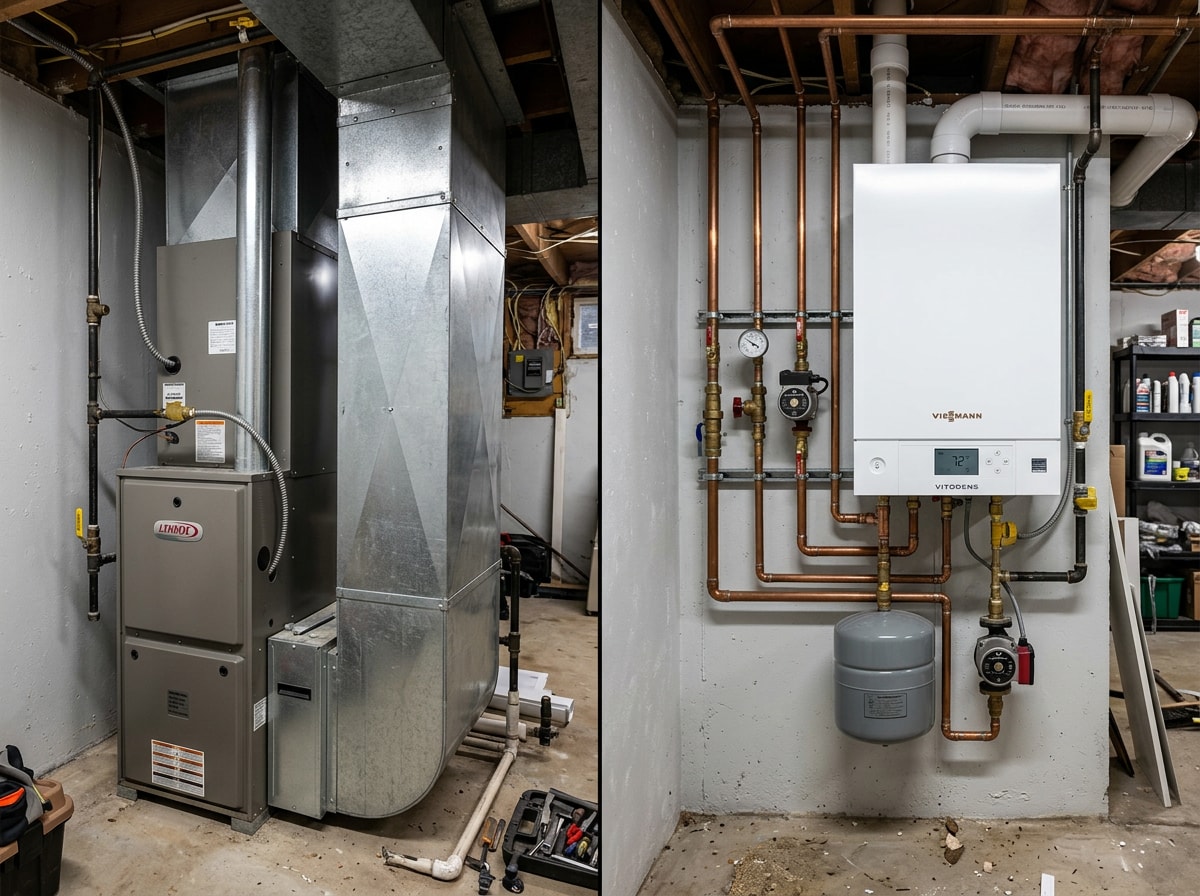
Picture a rectangular metal cabinet, roughly waist- to chest-high, finished in white, black, or grey. A small control panel sits on the front with buttons, dials, or a digital display. Pipes come out of the top or side, and you'll often see a pressure gauge, an expansion tank, and a water line feeding into the unit nearby.
Quick visual checklist:
- A solid metal box, not a tall skinny cabinet
- A control panel with a pressure gauge or digital readout
- Copper or steel pipes entering and exiting the unit
- A flue pipe, if the unit burns gas or oil
- Location: basement, utility closet, garage, or kitchen cupboard
In Forsyth County, spotting a true hydronic boiler usually means you're in an older farmhouse, a custom-built estate, or a renovated property. New-construction neighborhoods built during the county's rapid growth since the 1990s were almost universally wired for forced-air furnaces or heat pumps, not hydronic piping, so boilers are the exception here rather than the rule.
Boiler vs. Furnace: The Fastest Way to Tell Them Apart
A boiler heats water. A furnace heats air. That single difference drives almost everything else you'll see when you open the mechanical closet door.
| Boiler | Furnace | |
|---|---|---|
| Heats | Water (sent to radiators or floor loops) | Air (sent through ductwork) |
| Shape | Boxy cabinet or older cylinder | Tall, narrow metal cabinet |
| Connections | Small round pipes | Large rectangular ductwork |
| Common tell | Pressure gauge, sometimes a glass sight tube | Filter slot and a blower compartment |
| Distribution | Radiators, baseboards, radiant floors | Floor, wall, or ceiling vents |
If your home has radiators, finned baseboard heaters, or warm floors fed by visible pipes, you're almost certainly looking at a boiler. If you've got registers blowing air and a tall cabinet connected to sheet-metal ductwork, that's a furnace. A furnace looks like a tall metal cabinet usually tucked into a basement, attic, utility room, or closet, with large ductwork attached at the top or side and a grill panel where the filter lives.
Not sure which one is actually running your house? Our HVAC Contractor team can confirm what's installed and whether it's still doing its job properly.
A Closer Look at Boiler Parts and Finishes
Modern residential boilers are sleek rectangles, usually wall-mounted to save floor space. Older cast-iron units are bulkier, often standing on the floor like a short refrigerator, with more exposed piping and a heavier, more "industrial" look.
On the front you'll find the control interface: buttons, knobs, or a digital screen for setting temperature and reading error codes. Nearby, look for a pressure gauge, an expansion tank, and a water feed line. A healthy unit looks dry and clean. Rust streaks, scorch marks near the burner, or water pooling underneath are signs something needs attention.
| Feature | Wall-Mounted Condensing Boiler | Floor-Standing Cast-Iron Boiler |
|---|---|---|
| Size | Compact, briefcase-sized | Large, refrigerator-sized |
| Finish | White or black plastic casing | Bare or painted metal |
| Pipe count | Few, neatly bundled | Several, often exposed |
| Typical era | Installed after 2000 | Installed before 1990 |
Efficiency has improved a lot over the decades. Older fossil fuel furnace and boiler systems have efficiencies in the range of 56% to 70%, while modern conventional heating systems can achieve efficiencies as high as 98.5%, converting nearly all the fuel to useful heat for your home , according to the U.S. Department of Energy. That's a meaningful gap if you're deciding whether an older boiler is worth repairing or replacing.
Types of Boilers You Might Find in a Forsyth County Home
Combi, system, and conventional boilers all share a metal casing, a control panel, and connected piping, but the details differ.
Combi boilers are compact, wall-mounted units, often tucked into a kitchen cupboard or closet. There's no separate water tank, so you'll see one neat box with a digital display and a couple of pipes running beneath it.
System boilers are bulkier than combis but still wall-mounted. They pair with a separate hot water cylinder sitting nearby in a utility closet, rather than everything being built into one unit.
Conventional (regular) boilers are older-style units, usually floor-standing, that work alongside both a hot water cylinder and a cold water storage tank. These show up most often in older homes that haven't been updated.
Oil-fired boilers are less common in metro Atlanta than up north, but they do turn up in older rural properties around Forsyth County. If you're weighing oil equipment options, our guide on oil furnace installation costs and codes in nearby Alpharetta covers permitting and pricing that applies to oil-fired systems generally.
Why Boilers Are Rare (But Not Extinct) in Cumming, GA
Metro Atlanta's climate plays a bigger role in this than most homeowners realize. Forsyth County sits in a warm, humid climate zone where cooling loads dominate the energy picture far more than heating loads do. That's a very different design condition than the colder Northeast and Midwest, where hydronic boiler heat became standard in older housing stock decades ago.
Builders here have leaned on forced-air furnaces and heat pumps for new construction for decades, since those systems double up for air conditioning through the same ductwork. The boilers we do find in this market tend to show up in pre-1990s homes, renovated farmhouses, or custom estates where radiant floor heat was part of the original design. If you're not sure what's heating your home, our Cumming, GA service area page has more on the equipment we see most often in local mechanical rooms.
Warning Signs Worth Scheduling a Look At
Both systems show trouble in different ways, and catching it early is cheaper than an emergency replacement.
Boiler red flags:
- Radiators or baseboards that stay cold or heat unevenly
- Banging, knocking, or gurgling noises in the pipes
- Water pooling around the base of the unit
- Rapid, frequent on-and-off cycling
- Rust streaks on the casing
Furnace red flags:
- A yellow or orange burner flame instead of blue
- Weak airflow or rooms that heat unevenly
- A burning smell that doesn't fade after startup
- The blower runs but only pushes cool air
Aging, fuel-burning equipment of either kind carries combustion risk. Have the heating system, chimney and vents inspected and serviced annually , and keep working carbon monoxide alarms installed near sleeping areas, per guidance from the International Association of Fire Chiefs-poisoning-prevention). The National Fire Protection Association also publishes a free tip sheet with simple tips for using CO alarms and heating and cooking equipment safety worth keeping on hand.
If you smell gas, see soot on the equipment, or a CO alarm sounds, leave the house and call for help before you call anyone about a repair.
Our technicians walk through Forsyth County mechanical rooms year-round, and the pattern holds: most "mystery" units homeowners call us about turn out to be furnaces with unusual ductwork, not boilers at all. When it is a genuine hydronic system, catching a failing circulator pump or a cracked heat exchanger early usually saves the whole unit. Schedule a free inspection and we'll tell you exactly what's in your closet and what shape it's in.
When It's Time to Repair or Replace
If your system turns out to be a furnace rather than a boiler, Cumming homeowners have a few paths forward depending on age and condition.
- Furnace Repair for flame, airflow, or cycling issues on a unit that's still within its useful life
- Furnace Replacement for units past 15-20 years old or repeatedly breaking down
- HVAC Maintenance for annual tune-ups that catch small problems before they become expensive ones
For a broader look at how heating and cooling equipment works together in this climate, see our homeowner's guide to central heating and cooling in Woodstock, GA, which applies just as well across Forsyth County.
You can also browse {{SITE_URL}} for our full service lineup, or check recent completed projects in the area if you want to see our work before booking.
FAQ
What does a boiler look like compared to a furnace?
A boiler is a boxy metal unit with small round pipes carrying water, plus a pressure gauge. A furnace is a tall metal cabinet connected to large rectangular ductwork with a filter slot.
Are boilers and furnaces the same thing?
No. They're different appliances that heat homes in different ways. A boiler heats water and sends it through pipes to radiators or floor loops; a furnace heats air and pushes it through ductwork.
Where is a boiler usually located in a house?
Basements, utility rooms, garages, and kitchen cupboards are the most common spots. They're tucked out of the way but kept accessible for service and maintenance.
Is a boiler the same as a water heater?
No. A boiler heats water for space heating, and sometimes domestic hot water too. A standalone water heater only supplies hot water for taps and showers, not room heating.
Is a boiler better than a furnace?
Neither wins outright. Boilers deliver quiet, even, draft-free heat but need a separate cooling system. Furnaces heat up faster and can share ductwork with your air conditioner.
Do any homes in Cumming, GA still have boilers?
Yes, though they're uncommon. Most turn up in pre-1990s homes, renovated farmhouses, or custom-built properties with radiant floor heat, rather than in typical subdivision construction.